There are a variety of Kansas Department of Wildlife and Parks programs designed to recruit new hunters and anglers. All efforts are in response to a declining trend in the number of Kansans who purchase hunting and fishing licenses, as well as the desire to see our outdoor heritage passed on. But the positive impact of teaching youngsters about the outdoors may go much deeper than merely passing on a heritage.

Friday, November 6, 2015

Dogs and Fishing


"Dogs are not really good at fishing, but they understand why it’s important.”
Datus Proper, Field & Stream

I’ve always loved that quote, as well as the imagery that comes to mind when I read it. Last summer, I wrote about losing my old Lab, Creede, and how much he seemed to enjoy trout fishing in Colorado. Truthfully, Creede was happy to be included in whatever Lisa and I were doing. He did seem to enjoy fishing, always wading out to “help land” a trout after it was hooked, despite my pleas for him to stay on the shore.

However, I had a dog when I was in my teens that truly loved to fish. Sam was half Lab and half Brittany and he looked like a yellow Lab with a docked tail. He loved to hunt, but I always thought he enjoyed being part of our fishing trips more. He usually accompanied my buddies and I when we fished the Greenleaf Pond south of town.

I had “trained” him with a quail wing and fishing pole, thinking that because he was half Brittany, he should point. And point he did. When he was a puppy, I would show off his pointing skills to anyone who would watch, waving the pole and wing around until he froze. Every once in a while, he would humor me and actually lift one of his front feet in true pointing-dog style.

Sam was duly excited on his first fishing trip, and seeing the fishing pole was his cue. He watched the lure intensely as I cast, then kept his eyes focused on the water as I retrieved the lure. Next cast, same thing. I wondered if it was just because of the wing training, and it may have been, but all that went out the window when I hooked a fish. As soon as Sam saw the bass break the surface, he was in the water after it. I yelled “stay” and “get back,” but it did no good. He really thought it was his job to retrieve a fish once I got it near the shore. I don’t think I ever lost a fish because of Sam, but he wasn’t much help landing them, either.

After that first trip, Sam decided that he needed to stand with front legs in the water, and he watched cast after cast, never tiring. He loved fishing.

He’d go along when we fished for catfish in the creek, but stillfishing didn’t hold his attention the way casting a lure did. He’d sit quietly for a while, but if I didn’t get bite soon, he would wander around, never getting too far away, just in case. There was one catfishing trip, though, I will never forget.

It was a hot July day, and I was mid-way through my channel catfish phase. After catching plenty of bullheads at the county lake and from the creek in my young fishing career, I was ready to graduate to channel catfish, which I found more difficult to catch. One of the first hurdles was to find a bait that bullheads wouldn’t find and eat first. The meant no more worms. I tried shrimp, chicken livers, shad sides, and beef livers.

By accident, I turned a container of beef liver into dynamite channel catfish bait – I left it in the garage for three hot summer days. When I found it while getting my gear ready for a trip the creek, I noticed a green tinge in the bloody liquid surrounding the liver and could smell the aroma even with the lid sealed tightly. “This has to catch channel cats,” I said.

At the creek, Sam was all business as my cousin, Scott, and I readied our rods. I breathed through my mouth as I cut a chunk of greenish-red liver off a larger piece and put it on my hook. I left the lid off the container and moved a safe distance away from the odor to cast the bait into the slow moving water. I propped the rod on a forked stick and waited, not noticing that Sam had already grown bored and wandered off.

As I watched my line, I thought I heard water gurgling. Then I realized I was hearing lapping noises – a dog drinking. I turned and saw Sam finishing up the rancid juice in the liver container. Sam looked up with an expression that said “tasty!” I knew that dog loved foul odors because he never passed up an opportunity to roll in some long-dead animal, but the liver juice was almost too much.

I thought of Sam recently while fishing Milford Lake. A gentleman camped near the shore was exercising a pair of beautiful bird dogs that looked like German shorthairs, though they were black and white rather than liver and white. He explained that they were Deutsch Kurzhaars, just 11 months old, and they were romping in the grass with puppy exuberance. However, when we began casting, they became all business, standing next to one of us and watching our rods, quivering with intensity. When one of us hooked a fish, both dogs rushed over expecting to help with the landing. Like Sam and Creede, they weren’t much help. Fishing was obviously important to them, but they just weren’t any good at it.

Tuesday, December 23, 2014

Thanks Jim

I n 2001, Pass It On, the department’s fledgling hunter recruitment program was just beginning and as coordinator, I wasn’t sure where we were headed. I wanted to emphasize youth involvement, and I was certain hands-on experiences were important. We started by
training agency staff to be wingshooting instructors. 

Jim Kellenberger was in his 35th year as a game warden, holding the title of regional supervisor for the last 20. He was an avid hunter and skilled wingshooter and had taught hunter education through a good portion of his career. He had already passed on his love of hunting to his own children, and he took an interest in the Pass It On program, believing in its importance. Jim took all of the instructor training we could offer. He also had officers who worked for him involved.

We focused on wingshooting because Kansas offers a wide array of excellent bird hunting opportunities, and wingshooting clinics are easy to accommodate. The youngsters who went through our early classes responded positively, but we were only reaching a few hundred each year. 

In 2003, Jim retired from the agency after 38 years of service. He was respected and well-liked, and his officers rewarded him with an expense-paid dove hunting trip to Argentina! At his retirement party, Jim and I visited about the Pass It On program, and I suggested that he consider becoming a part-time wingshooting instructor (or maybe he suggested it, I can’t remember). 

A week later, Jim called and said he definitely wanted to see if we could create a part-time position for him. Neither of us knew how it would work out. My priority was conducting these events across the state and getting as many youngsters involved as we could.

Within a couple of months, Jim was outfitted with a fully stocked trailer, an old law enforcement pickup and a shooting vest with the Pass It On logo embroidered on the back. It was slow at first, but we did enough events that first year to build some momentum.

Interest continued to grow and Jim eventually built up to 21-25 events a year, mostly on Saturdays from March through October. Over the past 13 years, Jim conducted nearly 300 wingshooting events and instructed more than 10,000 shooters. Most were youngsters, age 10-16, but he instructed at many women-only events, as well. Jim has loaded more than 200,000 20-gauge shotgun shells into the semi-automatic shotguns we use in our programs. He then watched over-the-shoulder on each of those shots, instructing the shooters. I would bet my next paycheck that you could count the number of shooters who failed to break at least one target over the past 13 years on one hand.

Jim criss-crossed the state, never hesitating to drive from his home base in Jetmore to an event in Chanute or Junction City. When a group requested one of our programs, I contacted Jim to see if his calendar was open. He never once asked where or how far. It was, “I’m open that day. Just tell me when and where and I’ll be there.” He just about drove the wheels off of that first hand-me-down truck. Many event organizers asked for him by name when they rescheduled. His only rule was that we didn’t schedule any shooting events during pheasant season because he always had other plans. 

It’s been a good ride. Jim is still very much alive and kicking, much to the chagrin of Hodgeman County pheasants, but he’s hanging up his shotgun instruction vest. He had
another great year until some minor surgery knocked him out of action this October. While he was recuperating, with a singular goal of being able to walk the fields after pheasants this November, he confirmed what I suspected. He was retiring again. He actually apologized for
“bailing out” on me. I told him he didn’t owe the program an apology. He was responsible for what it had evolved into. I have a couple of other part-time instructors, and they’ll likely be busy next year. I know I can’t replace Jim – there’s only one. I hope to hire another instructor, but I don’t expect to find one with half them passion, dedication and knowledge
Jim had. I’m sad because I enjoyed working with him, but the kids are the ones who’ll miss out. He is truly one of kind.

On behalf of a generation of Kansas wingshooters and bird hunters, "
Thanks, Jim. We owe you more than you will ever know.”

Monday, November 17, 2014

CREEDE

The term “heavy heart” is an overused expression, and I never gave much thought to what it felt like. However, cliché or not, I don’t know how else to describe the weight I felt in my chest this past July. After having him by our side for 13 ½ years, our black lab, Creede, is gone. We held on as long as we could, and so did Creede, coping valiantly with what I can only imagine near the end. He didn’t appear to be in pain, but we knew he was struggling. Lisa and I did everything we could to make him comfortable and keep him around as long as possible, as much for us as him. Then came that dreaded July morning when I knew it was time.
When I returned home after burying Creede, every reminder added to the weight. As I got out of the truck, I missed hearing his hoarse “woof” that always greeted me, letting me know he’d seen me from his perch by the sliding glass door. In the house, his “happy toy” lay conspicuously near the top of the stairs. It was an old rubber squeak toy that he carried around whenever he was excited. When we came home, he would rush around the house looking for that toy, then he carried it, head thrown back, tail wagging, welcoming us as if he hadn’t seen us for a week.
His absence leaves a hole in our lives, but he’ll always be a part of us. He was an average hunter and retriever, but his unconditional loyalty to Lisa and me was anything but average, and our bond was instantaneous. I had pick of the litter and acted like I knew how to select the perfect puppy. In reality, Creede chose me. While the rest of the puppies quickly became bored with my attention and ran off to other adventures in the backyard, Creede stayed with me. From that moment until his death, he stayed with me.
He spent his first night at home in a large cardboard box next to our bed. I reached down with my hand to comfort him, and he went to sleep quickly. However, he woke me four times that night, and we went out to the backyard each time. The next night, he slept through, and so did I, both content, I suppose, with this arrangement. And he slept in that spot, sans the box, for the rest of his life. When I would get up in the night, I would slide my feet along the floor to avoid stepping on him. Usually, before I found him, I would hear his tail wag, thump, thump, thump, on the floor, helping me locate him. It was common for me to wake, listen for his rhythmic breathing or snoring and once I heard it, go right back to sleep. In the waning weeks of his life, he became restless around 4 a.m. He was having problems eating and keeping food down, so when I realized he wasn’t beside the bed, I got up with him. I continued to wake up at 4 a.m. after he was gone. In a half-awake daze, I listened for his breathing, then I would remember and feel the weight.
Losing Creede was tough because of our connection. He was a dog that wanted to be near us no matter what we were doing. Whether we were hunting, fishing or just working in the yard, he stayed close, just in case he was needed. He seemed to especially enjoy our September vacations to the mountains, taking long hikes with Lisa and standing belly-deep in the Rio Grande, waiting for me to catch a trout. We’ll feel that weight without him this fall, and I know I’ll smile through teary eyes when I look down and he’s not standing beside me watching my cast.
Some might say, “he was just a dog,” but our lives were happier with him along, that’s for sure. I’ll never know the extent of his physical ailments in the final weeks, but I’ll forever admire the way he coped and kept his dignity to the end. We can learn a lot from old dogs. We’ll have another black lab one day, but I know we’ll never have another Creede – and I’m okay with that.

Friday, February 15, 2013

What Would I Have Missed?


I’ve written extensively about how fortunate I am to have the hunting experiences I’ve had. I know that hunting with my father and granddad shaped who I’ve become as a person, what I do for a living and where I live. But, while looking at a picture from a recent hunt the other day, I wondered what I would have missed without hunting in my life..
I know plenty of kids who have great relationships with their parents and grandparents without going hunting. I will assert, though, that I think spending time with kids one-on-one teaching them to hunt and fish is a great way to build solid relationships; it may not be the only way, but it might be one of the best. But what would I have missed with those hunting experiences.
I would have never felt my heartbeat surge when a rooster pheasant flushed at my feet. I wouldn’t have seen the gleam in my granddad’s eye when he bragged about the shot I made on a pheasant. I would have never known the incredible anticipation of approaching a Brittany on point.
And those are just the very beginning. I could go on and on, but the point is that I can’t imagine my life without those experiences that have become indelible memories. Every year, I look forward to adding a few more. Of course things change, people come and go in our lives, but hunting still gives me optimism for the coming year.
Hunting is about relationships, passing on a treasured heritage, and sharing experiences that stay with us for life. Without the experiences of hunting with my family, friends and cherished dogs, my life would have been  – well I don’t even want to think about it. Never underestimate the power of passing it on.

Thursday, November 15, 2012

GRANDDAD'S .22


My shooting experience was limited to my Crossman BB gun before we moved to Greensburg. I was 11 and completely obsessed with fishing, and even though I had spent my life to that point living in large urban areas, I had a strong attraction to hunting. I read every hunting magazine I could get my hands on, and I was mesmerized by my granddad’s stories of hunting in Kansas and Colorado. Moving to a small town in southcentral Kansas opened the door to hunting for me.

A part of that move was Mom and Dad coming home. Mom had been born in Greensburg and Dad was born in Haviland. Dad’s family still owned land south of Haviland, and when he reconnected with the abandoned homestead where he had lived as a boy, we found a perfect place to plink. I still remember putting my first holes in a tin can with a .22 rifle.

The old bolt-action .22 had always been in my dad’s closet next to the canvas and leather case that held his shotgun. The .22’s wood stock was stripped bare of stain and varnish – a refinish job Dad hadn’t completed. That first winter in Greensburg, I proposed to Dad that refinishing the stock would be a good seventh-grade woodshop project.

“That’s a great idea. If you do a good job finishing that stock, the gun will be yours,” Dad said.

He then went on to tell me that Granddad had given him the gun. Even back then, that old Wards Westerfield had some age on it, but it was the best rifle in the world as far as I was concerned. Much later in life, I learned that my granddad’s brother had given him the gun sometime in the late 1920s to make up for breaking Granddad’s eye glasses. I don’t know where Granddad’s brother got the gun.

I spent what seemed like half a semester sanding the bare wood in shop class. Each time I would take it to Mr. Moore, our shop teacher, for approval, he’d slide his hands over the wood, pull a mechanical pencil from the pocket of his coveralls, then make some pencil marks where it needed more work. Mr. Moore discovered a small crack near the grip, and he showed me how to work wood glue into it before we clamped it tightly together .

Finally, I stained the white pine with a dark walnut stain. Then I spread a satin wax finish over it and polished it. When I showed it to Dad, he seemed impressed. We reassembled the stock to the barrel and action, and he handed me “my” gun, commenting on how smooth the finish was. I was proud.

I still have the gun. I’ve hunted some rabbits and squirrels with it over the years, but mostly I just get it out of the gun safe from time to time to remember. I’ll notice dust on the scope lenses and wipe them clean before shouldering the rifle. As I peer through scope, I remember my twelfth Christmas. I can actually remember opening that long, narrow present to uncover a Weaver box holding a variable power scope and rings. It wasn’t really a surprise. I had asked for a scope, but I was blissfully happy. We had to take the gun to a gunsmith just outside of Rozel so he could machine grooves into the barrel and install the scope. He must have known what he was doing because 40 years later that gun will still drive tacks.

It’s one of those old guns that has no market value to speak of. It was built by Mossberg for Montgomery Wards, and it was not an expensive gun at the time. The barrel shows evidence of rust from many years ago, and the crack in the stock still shows. The wood still holds my junior high woodshop class stain and wax, but the bolt action still works smoothly. I’m stuck with it for sentimental reasons, and I’ll always treasure it as part of my own hunting heritage.

Wednesday, October 31, 2012

The Perfect Hunt


It was mid-November 1972, and we didn’t have eighth-grade basketball practice that Wednesday afternoon before Thanksgiving. Instead of goofing off with a couple of buddies on the six-block walk from school like usual, I hustled straight home. Granddad and Grandma had arrived the evening before, traveling from their home in Canon City, Colo., to stay with us over the holidays. I was looking forward to spending time with them.
When I burst through the door, cheeks red from the brisk November wind, Grandma smiled and in her soft, slow drawl, asked me where my hat was. I told her it wasn’t cold enough for a hat, and she just clicked her tongue at me. Granddad motioned for me to sit with him. I settled next to Granddad on the couch, and he patted my knee and mentioned something about pheasant hunting. I had been looking forward to hunting together over the weekend and assumed that’s what he was talking about. My eyes got as big as saucers when he clarified that he thought we had time for a short hunt that evening.
“We visited the farm this morning,” he said. “Dale got the milo on our eighty cut, and I think we have time to walk the stubble before it gets dark tonight. He said he’s been seeing some birds along the road,” Granddad added with a wink.
I exploded off the couch and tore through my bedroom, tossing clothes off a pile in my closet while looking for old jeans and my hunting boots. I changed, grabbed my tan hunting vest and cap, cased my 20-gauge and was back in the living room before Granddad could finish tying his boots. He chuckled, “Slow down, son. We’ve got time.”
The 10-mile drive to the farm seemed to take forever, and as we drove, I thought about how we could hunt the stubble. Dad and I had hunted the 80 earlier that season before the milo was cut, and we’d seen birds. But as we pulled up on the west end of the field, I silently wondered how just two of us would flush any pheasants in the open stubble. I was only in my second hunting season, but I knew enough to be skeptical. Granddad sensed this, so he laid out his plan.
“I think we can split up. I’ll let you off at this end, and I’ll drive to the other. Then we’ll walk toward each other. That might confuse an old rooster long enough for one of us to get a shot. We’ll have to keep each other in sight and be very careful about where we can shoot safely,” he added as I quietly slipped out of the car.
As I watch Granddad drive off, I was still unconvinced. The field was flat, and I could easily see him as he walked to a row about half-way in and waved to me. We started our slow walk toward each other. I wasn’t expecting to see any pheasants, at least not within shotgun range, but when we were about 80 yards apart, I heard something to my left. As I swung around, a magnificent rooster cackled its way into the sky. The noise and shock of a rooster flush always flustered me (it still does), and my panic was doubled because I was so complacent. I rushed my gun mount, and the butt plate slipped too high on my shoulder. I slid it back into position, but by then the bird was out of my range. The shot was futile.
“Dang it,” I mumbled under my breath, as I grinned sheepishly and shrugged at Granddad. “He was right.”
Granddad just nodded and continued walking methodically toward me. Five steps later, another rooster flushed near me, taking the same route as the first. I was more ready this time and only half has flustered. I swung through the bird, shot once, and it crumpled. I was in disbelief — because I got a second chance and because I dropped the bird stone dead.
That was the hunt; 45 minutes, two birds flushed and one in the bag. I was elated. I felt proud of our success, and it didn’t hurt my ego when Granddad bragged about the shot I made. Thinking about that afternoon is still gratifying. I can see a snippet of my life that was perfect. No 13-year-old boy loved his grandfather more than I loved that man.
Forty years later and I can still immerse myself in the thrill of that hunt and my feelings for Granddad. Granddad’s been gone 32 years, but I am forever grateful for our relationship and can’t imagine my life without it. Hunting and fishing together was part of our bond, and I know now I was one of the lucky sons. Never underestimate the power of passing it on.

Tuesday, August 7, 2012

Something To Look Forward To

Hunting has always given me something to look forward to. When I was 13, opening day of pheasant season was a big day that couldn't arrive soon enough. I usually started to get the fever in August when my family would take Sunday evening drives in the country. I'd be watching for pheasants -- scouting. But I didn't have to see lots of pheasants to be excited for opening day. As a boy, I didn't know how important the camaraderie would become, and I didn't have the foggiest idea how important hunting would be in my life. I just knew that something new and exciting was going to happen, and I loved every minute of it, whether there were lots of birds or not.

Today, I understand how important hunting has been in my life -- how important it is to be in the field with certain people and dogs, and I fully appreciate every day. I'm looking forward to the hunting seasons even though the prospects for good bird populations in my area aren't good. The drought and heat have taken a toll on pheasant and quail populations, I'm afraid. But I'm still making plans to hunt. I've already made arrangements for my cousin to join me on opening day. Last year's bird hunting was disappointing, but we had memorable experiences, hunting ducks and even did a little crappie fishing. We made the best of what we found. We'll do the same this year.

Kansas provides a variety of opportunities, and we'll stay flexible and enjoy each other's company. I can't wait for hunting season!

Tuesday, July 24, 2012

No Substitute For A Mentor

I've written often about individuals who've mentored me, and how fortunate I am to know them. I've learned plenty about the outdoors by reading, watching video and just getting out there, but I learned invaluable lessons from mentors; lessons that helped me be more successful, safer, and legal in the field. Recently, I've had a couple phone calls from potential hunters wondering how to get started. Both were men in their 40s. Neither had any hunting experience, and neither knew anyone who hunted.

So what can they do? My advice is get acquainted with a hunter or hunters because there really is no substitute for an experienced mentor. And I know that's not as easy as it may sound. While most hunters I know freely mentor people, hunting is very personal. Everyone hunts for different reasons, and those reasons are shaped by life experiences, personality and lifestyle. So just walking up to someone who looks like a hunter and asking them for help learning about hunting may get a cold shoulder. However, getting to know a hunter first will nearly always result in the transfer of information and possibly personal mentoring.

I recommend getting to know hunters through conservation organizations, local gun clubs or outdoor shows and events. It will take time, but conservation organizations such as Ducks Unlimited, the Kansas Wildlife Federation, Pheasants Forever, or the National Wild Turkey Federation are made up of hunters and outdoor people. When they learn of your interest, desire and commitment, they'll take you in. Likewise, local trap, skeet and sporting clays ranges include many members who hunt. The small clubs are always recruiting new members, so newcomers and beginners are usually welcomed.

Just remember, a potential mentor will want to know you and trust you before any mentoring will takes place. Developing a trusting relationship takes time. Get to know people and let them get to know you, then you can begin a journey to become a hunter.

Thursday, July 12, 2012

A Hunt Etched In Memory

It was mid-November, and I was out of eighth-grade basketball practice early. Granddad and Grandma were in town, and Granddad told me he thought we had time for a short pheasant hunt before dark. I tore through my room, rummaging through a pile of clothes in my close to find my old jeans, boots, tan vest and hunting cap. I dressed hurriedly, cased the 20-guage and ran through the house to the living room where Granddad patiently waited. I was READY.

In 20 minutes, we were parked on the land Granddad and Grandma still owned from the family farm. It was milo stubble, and while we'd seen birds in the field before the milo was cut early in the season, I was not optimistic that the two of us would find any birds. I was a rank beginner, but I had a couple of pheasant seasons under my belt, and I knew enough to know that wily rooster pheasants would easily out-maneuver two hunters in the open stubble. However, Granddad a plan. He dropped me off at one end, then drove to the other other end. "We'll walk toward each other," he said. "And we might be able to get a bird to flush between us. You'll have be really careful, and know where you can shoot safely."

I still wasn't convinced, but I was game. It wasn't a large field and it was flat, so I could easily see Granddad when he got in position. After he waved, we started a deliberate walk toward each other. I distinctly remember when were about 70 or 80 yards apart that a rooster flushed in front of me, flying to my left away from Granddad. It was a safe, open shot, but in my panic to shoulder the gun and shoot, I pulled the butt stock clear above my shoulder. By the time I pulled it back into position and took a shot, the bird was likely out of range, and I missed. The flush of a rooster pheasant always flustered me, and it still does today. I remember thinking that maybe Granddad knew what he was doing, after all. I looked back to him and shrugged and he just grinned and kept walking toward me at a measured pace. I was on full alert when another rooster flushed. This one was closer to me, and it followed the same route as the first one. I swung the shotgun up and through and pulled the trigger. The bird crumpled.

That was it for the evening. Two birds flushed, one bagged, but I was ecstatic. I'll never forget how proud I felt, and it didn't hurt that Granddad bragged about my shot when we got home. I don't think any 13-year-old boy every loved his grandfather more than I loved that man. That was more than 30 years ago, and the spontaneous hunt that lasted less than two hours remains one of my most treasured boyhood memories. Never underestimate the power of passing it on.

Friday, June 29, 2012

Summer Magic

One of my hobbies for the past two summers has been thinking up new ways to complain about the heat. One of my favorites was when I commented one day last July about how 95 degrees felt "cool." And I was serious! I guess compared to 105, 95 is cool. Then I realized that thinking 95 is cool is like thinking three-dollar gas is cheap. Anyway, I don't deal with the hot weather as well as I did when I was a kid. When I was 12, summer was  synonymous with outside. I have such fond memories of summer when I was that age, and none of those memories include being inside by the air conditioner. We road bikes to the county lake in the morning to fish. Back home by noon for lunch, then back on the bikes to the city pool by 2 p.m. We swam until 4 or so before heading home for supper. After supper we were back outside on our bikes cruising around town or shooting baskets in the driveway. At dusk, it wasn't unusual to get a neighborhood game of "Capture The Flag" going, which often lasted until well after dark. The next day, we got up and did it again. I don't remember ever worrying about how hot it was. Summer was outside, fishing, bike riding, swimming and neighborhood fun. Summer was magic.

Friday, June 22, 2012

Where Would I Be?

I was scrolling through my photo storage recently, looking for a particular image when I came across a photo my wife took in Colorado last year. It's one of my favorites of me and the big black dog trout fishing. I've always said Creede (the lab) isn't good at fishing, but he knows it's important. You can see it in his eyes, and you can see the joy on my face. The photo immediately immersed me in memories of fishing the Rio Grande. Then I wondered if those experiences would be as important and whether I'd be looking forward to our trip this fall as much if I hadn't grown up fishing with Granddad and Dad. Where would I be today with that in my past?

It's a scary thought, but it isn't real because I did grow up with that in my life. I don't dwell on the past other than to reminisce about good times, but when I think about how much those experiences have meant to me, I get pretty sentimental. Spending time outdoors with my family has been an enormous guiding factor in my life, and I'm indescribably happy that I have that. It's something to think about next time you're wondering if you have time for a short fishing trip with the kids. 

Tuesday, June 5, 2012

Try Panfish Now

Most kids learn to fish by catching panfish -- bluegill and green sunfish. Panfish are present in all waters, and in most small lakes and ponds, they are numerous. They're always hungry and easy to catch. I don't know too many veteran anglers who don't fondly reminisce about watching a bobber bounce as bluegill nibbled on the bait. As we progress as anglers, we often leave panfish behind while we pursue more "grownup" fish species. However, whatever your age, you can't deny that bluegills and green sunfish can be a blast to catch. And now is the time to catch them. Check out the 2012 Kansas Fishing Atlas  Find a pond, state fishing lake or community lake and fish the shallows. Bluegill have been on the spawning beds  for some time, but they're still shallow in many lakes. They'll hit small jigs, but the best way to catch them is still a small bobber and a hook baited with a piece of worm. It's hard to believe a fish that small can pull that hard, and if you're lucky enough to find some big bluegills -- 9- to 11-inchers -- hang on! Take a youngster and you'll find yourself watching the bobber through young eyes, and you'll feel 10 years old again.

Tuesday, May 22, 2012

Summer Practice

While the calendar might not make it officially summer, the temperature certainly does. Turkey season runs through the end of May, and Squirrel season opens June 1, but for most hunters, summer is the long wait for hunting seasons to re-open. Hunters may use the off-season to maintain gear, stay in shape and generally bide their time until Sept. 1 when the dove season opens. However, for wingshooters, summer is the time to practice shotgun skills. Most Kansas communities, large and small, have a local trap and skeet club or sporting clays course. Nearly all clubs have a designated evening for practice, and members always welcome new and young shooters. An evening at the shooting range is a great way to improve your wingshooting skills, and you'll likely meet some interesting, like-minded people. Kids are always welcome, and rigid gun safety protocol at gun clubs is great reinforcement for young shooters. Take a young shooter to the gun club this summer; you'll both have a ball.

Friday, May 11, 2012

A Creek Runs Through It

When I was a kid, a creek was like a magnet to me. If it had running water and fish in it, I could not stay away. I remember a tiny creek that ran through a golf course where me and a friend spent countless hours catching creek chubs and crawdads. Even though we both owned fishing poles, making due with wood slats, fishing line, hooks and some hot dogs and raw bacon seemed like more fun or more primitive. We probably caught more crawdads as we did fish, but they were just as exciting. Wherever I went, a creek or stream with running water drew me in. Of course fishing was the most fun, but even an intermittent drainage can provide opportunities for frog catching, wading, and just exploring the mud and cattails. Every kid should know the fun of exploring a creek. It doesn't require any planning or preparation. Just turn them loose on the creek and stand back. Making a fishing pole from a willow branch and catching a grasshopper or worm for bait will dramatically enhance the experience. Catching a fish would be just icing on the cake. Any nearby creek, large our small, will do. Get the kids out this weekend and let them explore the magic of a creek.

Friday, May 4, 2012

PASS IT ON WITH PATIENCE

This spring, one of my co-workers came in to discuss his plans for his son's first turkey hunt. Dustin's boy, Hunter, is 8 and has been accompanying his mother and father in the field since he was old enough to walk. This spring, Hunter was ready to shoot a turkey. Dustin borrowed a youth-model, 20 ga. semi-automatic shotgun, and the two practiced shooting stationary targets for a couple of weeks before the youth season opened. On their second hunt, Hunter made a great shot on a nice tom. Father and son were thrilled and proud. That experience gave Hunter the confidence to learn to shoot flying targets. Dustin brought him to the local gun club on a recent evening and before members started shooting five-stand, Hunter was allowed to shoot an incoming target. After a a little instruction, Hunter smoked the target on his first attempt. Hunter appeared elated with his success, but when asked if he wanted to shoot again, he declined. He rubbed his shoulder, which was smarting a little from the recoil, and there was obviously some anxiety about shooting in front of other shooters. I thought, "Maybe this kid knows to quit while he's ahead." We all bragged about him breaking his first target and that his break percentage was 100 percent. We didn't push him to shoot more. He and Dad hung around and watched others shoot five-stand and trap. In no time, Hunter was champing at the bit to shoot again. When the trap shooters were done, Dad let him shoot a few trap targets from just behind the house. He broke the first one before missing a couple. He was satisfied and ready to quit. And again, we didn't push him to shoot more than he wanted. When he left that evening, Hunter was jabbering about how much fun he'd had, thanking members who helped him, and making plans to return next week. The point is, Hunter was allowed to progress at his own speed. He made the decision when and how much he shot, and he came away with a positive experience. It's easy to get caught up in the excitement of a young shooter's initial success and not pay attention to their emotions and feelings. Be patient. Always ask if they want to shoot again, and avoid putting them in situations that could embarrass them or make them feel uncomfortable. Remember that learning outdoor skills such as wingshooting is a life-long process and it's all part of the journey to becoming a hunter. Take time to enjoy every step.

Monday, April 30, 2012

Shooting Fun

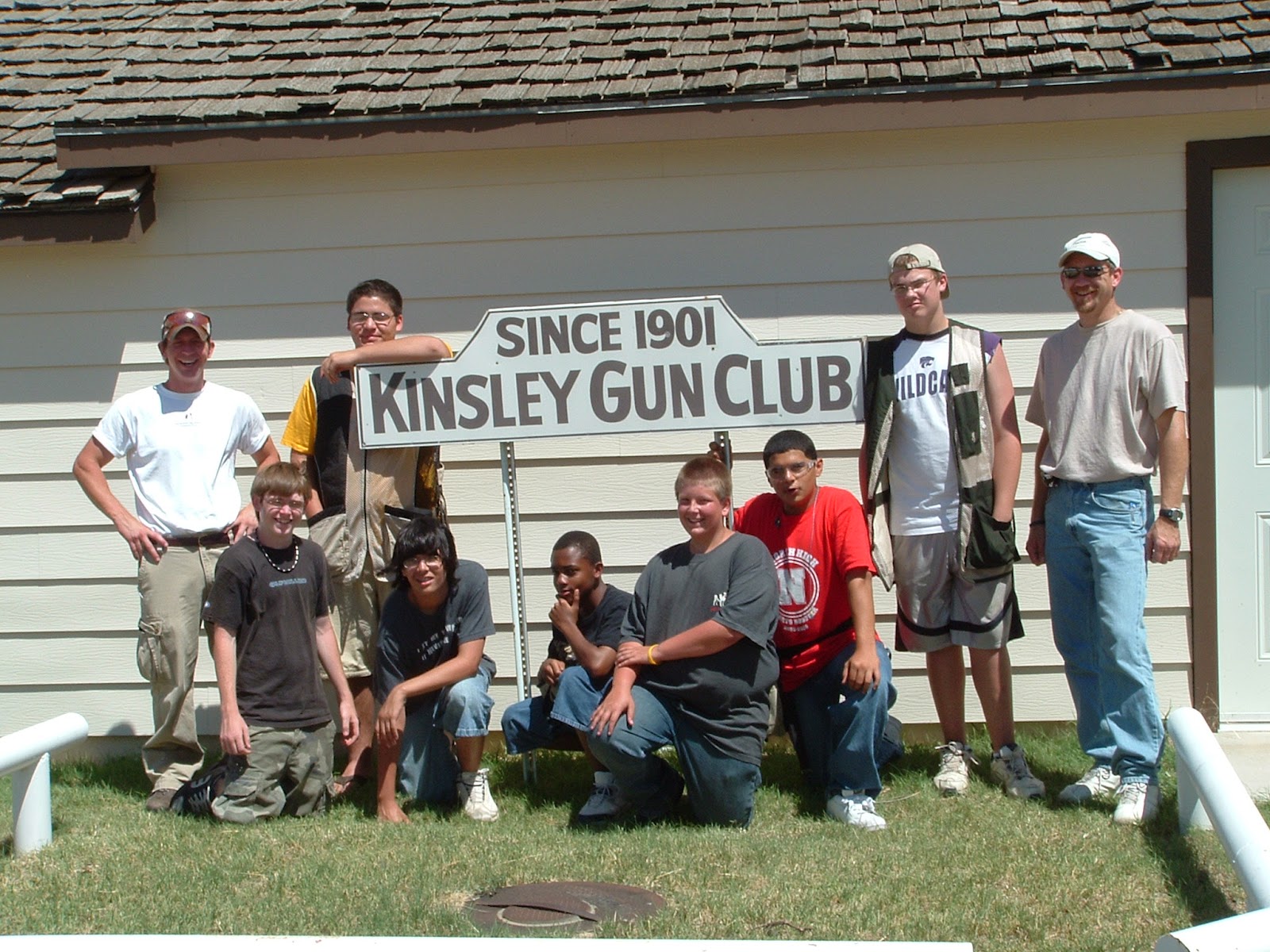
I'll never forget the summer I was 12 years old, and Dad took me to shoot trap at the Kinsley Gun Club. We had started pheasant hunting the previous fall, and improving our shotgun skills was a primary motivation. Neither of us knew anything about trap shooting, but local club members welcomed us and were generous with helpful hints. One shooter from Greensburg, Larry Schmidt, took special interest in helping me and even loaned me a gun that first year. We shot regularly for a couple of summers before I got busy with other activities and stopped making time for shooting. However, I never forgot the fun and great friendships we made. Much later in life, I became associated with another gun club and found the same kind of welcoming, friendly attitude. I've consistently met good people at gun clubs and shooting events, and I've seen new and young shooters welcomed everywhere I've been. Shooting at a local gun club is an inexpensive, safe and enjoyable activity for youngsters, and it could keep them from other less wholesome activities. Get involved with your local gun club or inquire with your local 4-H club to see if it sponsors a 4-H Shooting Sports Program. You and your young shooters will meet great people and have a great time. And you'll develop shotgun skills that will make next fall's hunting seasons much more enjoyable. By the way, the Kinsley Gun Club is still going strong and welcoming young shooters. Each fall, the club hosts the Kinsley Kids Klassic when young shooters from around the state gather for a competition. I'll keep you informed about his year's event.

Wednesday, April 11, 2012

Mentoring Payback

I've written several entries about some of the wonderful mentors I've been fortunate enough to have in my life. One was a good friend I met at college who introduced me to hunting ducks over decoys. Kurt grew up hunting Cheyenne Bottoms, and he passed on his love of duck hunting to me. I've been hunting ducks over decoys ever since, and I've been indebted to Kurt for his generous help. However, while turkey hunting the other morning, I reminisced about past hunts, and I remembered one from more than 25 years ago. Though I wasn't exactly an expert spring turkey hunter or caller, I had a couple of spring toms under my belt, and I wanted Kurt to experience that thrill. We hunted for a day-and-a-half without results, then while driving to a new spot, we spotted a tom crossing a field. We had permission on the land, so we hurriedly moved to intercept the bird. We eased down an old shelterbelt and started calling. The bird was moving faster than we thought, and we were well behind it, but it was in the mood for love and gobbled immediately to my amateurish calls. We scrambled to get into shooting position, and I called again. Another gobble, this time closer. We both spotted the top of the bird's fan at the same time. The tom was strutting back toward us, but he had a creek and fence to cross. I knew enough at the time to be anxious about whether the bird would cross those obstacles, but I underestimated this bird again. Without the slightest hesitation, the tom flapped across the creek and went right back into strut, maintaining on a beeline toward our position. Then a cow and calf trotted between us and the bird. Again, the tom was undeterred. When it got to the fence, it was in range, but before I could tell Kurt to shoot, the bird squeezed under the bottom wire and went right back into its strut. Now it was in the clear and well within shotgun range, and Kurt made the shot. We were both elated, but the normally even-keyed Kurt was as excited as I'd ever seen him. I'd like think I paid him back in mentoring, but I think I enjoyed the turkey hunt as much as Kurt did.

Wednesday, March 28, 2012

Formula For Happy Kids

When I think back to some of my happiest times as a kid, they usually revolve around riding a bicycle with a fishing pole strapped to the handlebars. I once wrote that every kid should own a good rod and reel by the time they're five years old, and that for a happy childhood, they should get a bike when they're a little older. To top it off, they should have a fishing hole within bike-riding distance. I thought I was living in Utopia when our family moved to a small, central-Kansas town when I was 11 years old. Of course I had the rod and reel and bike, and now we lived about a mile from the state fishing lake. Yep, that first summer was heaven. Every morning, my cousin and I would ride to the lake and have a ball catching fish, frogs, tadpoles, and getting muddy. Every kid should find that kind of happiness, but I know not every kid can ride their bike to the lake. However, it is possible, even necessary, to get a youngster their own rod and reel. Buy a quality spincast reel. I've spent too much time working on old hand-me-down or cheap reels kids brought to fishing clinics. A good reel doesn't have to break the bank, but a quality spincast reel will ensure more time fishing and less time working on the reel.  A 5 1/2- or 6-foot medium-light casting rod will work for about any situation. Buy each youngster a small tackle box of their own, and fill it with a selection of spinners, jigs, a few small crankbaits and a couple of bobbers. Then, take them fishing! Take advantage of the great spring weather we're having and go to your local state or community lake. You'll find a listing of all fishing waters in the 2012 Fishing Regulations Summary, and there is even a Family Friendly designation for community lakes suited for family outings. Get out and pass it on. I can assure you, your kids will never forget.

Monday, March 19, 2012

Fishin' Time

You gotta love spring. Even though this has been a mild winter for Kansas, spring is a welcome season. Spring brings warm temperatures, new growth, and most importantly, cooperative fish. You can find and catch fish in shallow water in the spring, and fish are always easiest to catch when they are shallow. First, fish move shallow to find warmer water and food. Soon after, they move shallow to prepare for the spawn. This is a perfect time to take a new or young angler. When fish are concentrated in shallow water near shore, they are not only easy to find and catch, they are accessible to bank anglers. And maybe one of the best ways to catch them is with a bobber and a small jig. It's an easy rig for a youngster to handle, and it works. The bobber keeps the jig from sinking into and snagging on rocks or brush, and it holds the jig tantalizingly in front of the fish. Even though springtime fish are hungry and eager to bite, cool water makes them somewhat sluggish, so a small, slow-moving bait is best. Let the bobber sit; wave action will be enough movement. Try to get it as close to the brush and weeds as possible, and set the hook if it goes under. Seeing a bobber go under is exciting, even if it's not on you line. And while you can catch just about any pond fish with this rig, crappie might be the most sought-after. Nothing tastes better than fresh crappie fillets. Try the rig in a pond or state fishing lake this spring, and don't forget the kids.

Tuesday, March 13, 2012

TAKE ADVANTAGE OF SMALL WATERS

I've used it and I'll bet you have, too. We probably all use the excuse, "I don't have time to go fishing," too often. The problem is that you'll be just as busy tomorrow and the next day. Making time for really important stuff like fishing is important to your health. I've found a way to go fishing more often by rediscovering small waters. There are a couple of local ponds that provide great fishing, and I can be on the water in less than 30 minutes. Now that we're back on Daylight Savings Time, an evening fishing trip after work is doable. Recently, my dad, aunt and I took advantage of unseasonably warm weather and found the crappie cooperative. We didn't catch a bunch, but those we caught were large and scrappy. Take advantage of the next really nice day this month and fish a small pond or lake close to home. Small waters warm up more quickly than larger lakes, so March is a perfect time to fish them. Take a youngster or adult friend along, and you'll both be glad you did. You'll be amazed at how just a few hours of fishing can improve you're mood and general outlook on life.